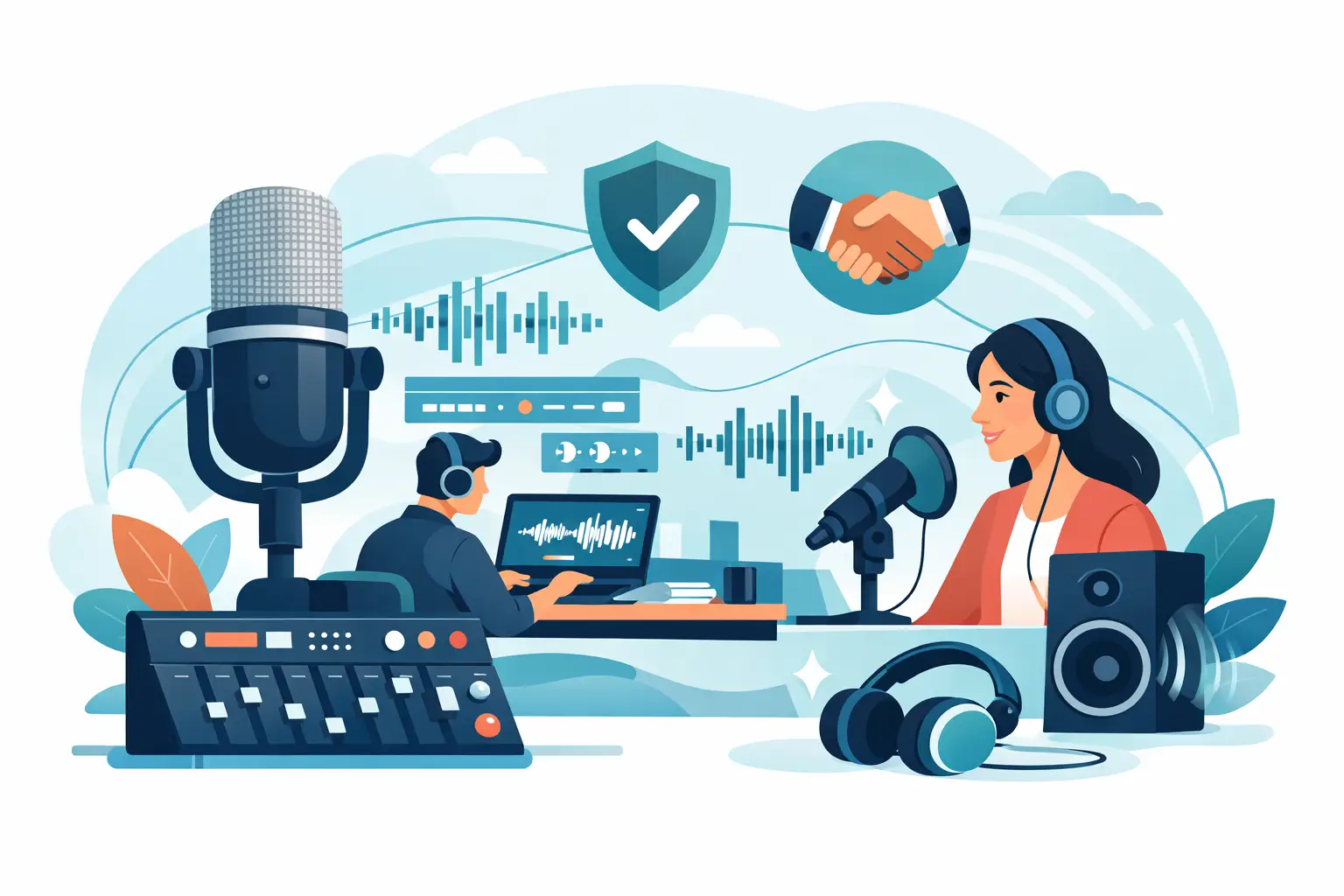
Podcast Sound Design Services That Build Trust

A great guest can share a career-defining insight and still lose a listener if the episode begins with an abrupt cut, distracting room noise, or music that feels borrowed from someone else’s show. Podcast sound design services shape the moments around the conversation so your ideas arrive with clarity, energy, and a recognizable point of view.
For creators, entrepreneurs, and brands, sound is not a finishing touch. It is part of the experience people use to decide whether your work feels credible enough to hear again. The difference may be subtle to the audience, but it is unmistakable: a show that feels intentional holds attention longer and gives every episode a stronger professional presence.
What Podcast Sound Design Actually Does
Sound design is the creative and technical work that gives a podcast its sonic identity. It can include a custom intro and outro, carefully selected music, transition cues, ambient texture, sound effects, dialogue cleanup, pacing edits, and final mastering. The goal is not to fill every second with noise. The goal is to make the listening experience feel considered from the first beat to the final sign-off.
Think about the opening of your show. A short music cue can establish confidence before you say a word. A transition can signal a change from story to takeaway without forcing listeners to work to follow the structure. A clean edit can remove a distracting pause while preserving the natural rhythm that makes a conversation feel human.
The strongest sound design supports the message rather than competing with it. A business podcast may need a clean, modern sound that feels focused and trustworthy. A narrative show may benefit from music and atmospheric layers that build emotional context. A creator-led interview series may need only a distinctive intro, balanced voices, and restrained transitions. The right approach depends on what your audience should feel and remember.
Why Sound Quality Changes How People Hear Your Brand
Listeners make fast judgments. If voices are hard to hear, volume shifts from segment to segment, or background noise pulls focus from the story, even excellent content can feel less reliable. This matters especially for experts, local businesses, authors, and founders using a podcast to build authority.
Polished audio communicates preparation. It tells listeners that you value their time, understand your own brand, and can deliver a consistent experience. That impression carries beyond the episode. A potential client who hears a well-produced podcast may be more likely to trust your presentation in a meeting, on a stage, or in a sales conversation.
There is also a practical benefit. Consistent sound makes episodes easier to consume while commuting, working out, cooking dinner, or moving through a busy day. Listeners should not need to adjust the volume every time a host changes or a recorded clip begins. Good production protects the message from avoidable friction.
The Difference Between Editing and Sound Design
Podcast editing and sound design work together, but they solve different problems. Editing organizes the recording. It removes mistakes, tightens long pauses, manages tangents, balances speakers, and prepares the conversation for a clean final mix.
Sound design adds identity and emotional direction. It considers how the episode opens, how segments move, when silence has impact, and where music can add momentum. It also creates consistency across episodes, so a listener recognizes your show before they see the title on screen.
Many new podcasters need both. A raw recording can sound better after basic cleanup, but it may still feel generic without a defined sonic system. On the other hand, a dramatic soundtrack cannot rescue an unfocused episode or poorly captured dialogue. Effective production starts with a strong recording and then builds the right amount of creative detail around it.
What a Thoughtful Production Process Looks Like
Before selecting music or creating an intro, a production partner should understand the purpose of the show. Is the podcast designed to generate leads, strengthen a personal brand, support a community, educate customers, or document stories that deserve to be heard? The answer guides every creative decision.
From there, the work usually begins with your format and audience. A weekly 20-minute solo show needs a different pace than a 90-minute roundtable. A podcast for creative professionals can carry more personality than a tightly structured series for a regulated industry. Neither is better. They simply require different choices.
A useful sound-design plan considers four connected pieces:
A sonic identity, including music direction, tone, and recurring elements that fit your brand.
A listener journey, from the opening hook through segment transitions and the closing call to action.
Audio consistency, including voice balance, noise reduction, loudness control, and clean delivery across platforms.
A repeatable workflow that keeps future episodes consistent without making the process feel rigid.
This planning phase saves time later. Instead of reinventing the show every week, you have a framework that leaves room for fresh conversations while protecting the qualities listeners come to expect.
When More Sound Design Is Not Better
There is a temptation to use every available effect because the tools exist. That can make an episode feel crowded, dated, or disconnected from its subject. A thoughtful podcast about financial strategy probably does not need dramatic risers between every point. An intimate interview may lose its emotional honesty if every pause is covered with music.
Restraint is a production skill. The best choices often feel invisible because they guide the listener without asking for attention. Music should sit beneath the voice rather than obscure it. Transitions should clarify the structure rather than interrupt it. Sound effects should be purposeful, not decoration.
There are exceptions. Branded fiction, documentary storytelling, entertainment shows, and highly produced campaigns may call for a richer sonic world. In those formats, sound can carry narrative meaning that words alone cannot. The key is making every layer earn its place.
Building a Sound That Can Grow With Your Show
A podcast is rarely finished after its first episode. Your audience may grow, your interview style may evolve, or the show may expand into video clips, live events, sponsorships, and branded campaigns. Your sound design should be recognizable enough to create continuity and flexible enough to evolve with the work.
Start with a clear foundation: a polished intro, a musical direction that fits your voice, a consistent mix, and a few transitions you can use with purpose. As the show develops, you can add seasonal variations, segment-specific cues, narrated trailers, or custom audio for special series without abandoning the identity listeners already know.
This is also where professional production support can reduce the pressure on a host. You should not have to become an audio engineer, music supervisor, and editor before you can publish meaningful work. A capable studio can help translate your vision into a repeatable production system while keeping you involved in the choices that define your brand.
At The Inner Circle Studio, that support can extend from recording in a professional environment to editing, sound design, and delivery-ready assets, giving creators one place to move from an early idea to a finished episode.
Questions to Ask Before Choosing Podcast Sound Design Services
The right service is not always the one with the longest list of effects. Ask how the team approaches your audience, format, and business goals. Ask whether they can create a sound that feels specific to your show rather than applying the same template to every client.
It is also wise to discuss revision expectations, turnaround times, ownership and licensing of music, and the deliverables you will receive. If you plan to publish video podcasts, short-form clips, or promotional trailers, make sure the audio workflow supports those uses from the beginning. Clear communication protects both the creative vision and the production schedule.
Finally, listen for taste. Technical skill matters, but so does the ability to know when an episode needs momentum, when it needs room to breathe, and when a listener should simply hear the voice behind the idea.
Your podcast does not need to sound like every major network production. It needs to sound like a confident, intentional version of you. Give the story a space where it can be heard clearly, felt fully, and remembered after the episode ends.


Comments