Choosing a Voiceover Recording Studio in Detroit

A voiceover recording studio Detroit creators choose can change the way an audience hears their work. A confident script can lose its impact to room echo, uneven levels, distracting background noise, or an edit that feels rushed. When the recording is clean, intentional, and built for its final use, your message has room to land.
That matters whether you are narrating an audiobook, voicing a commercial, recording an online course, building a character reel, or adding narration to a branded video. Great voiceover production is not about making every voice sound the same. It is about capturing your voice clearly and shaping it to serve the story, the audience, and the platform where it will be heard.
What Detroit Creators Need From a Voiceover Recording Studio
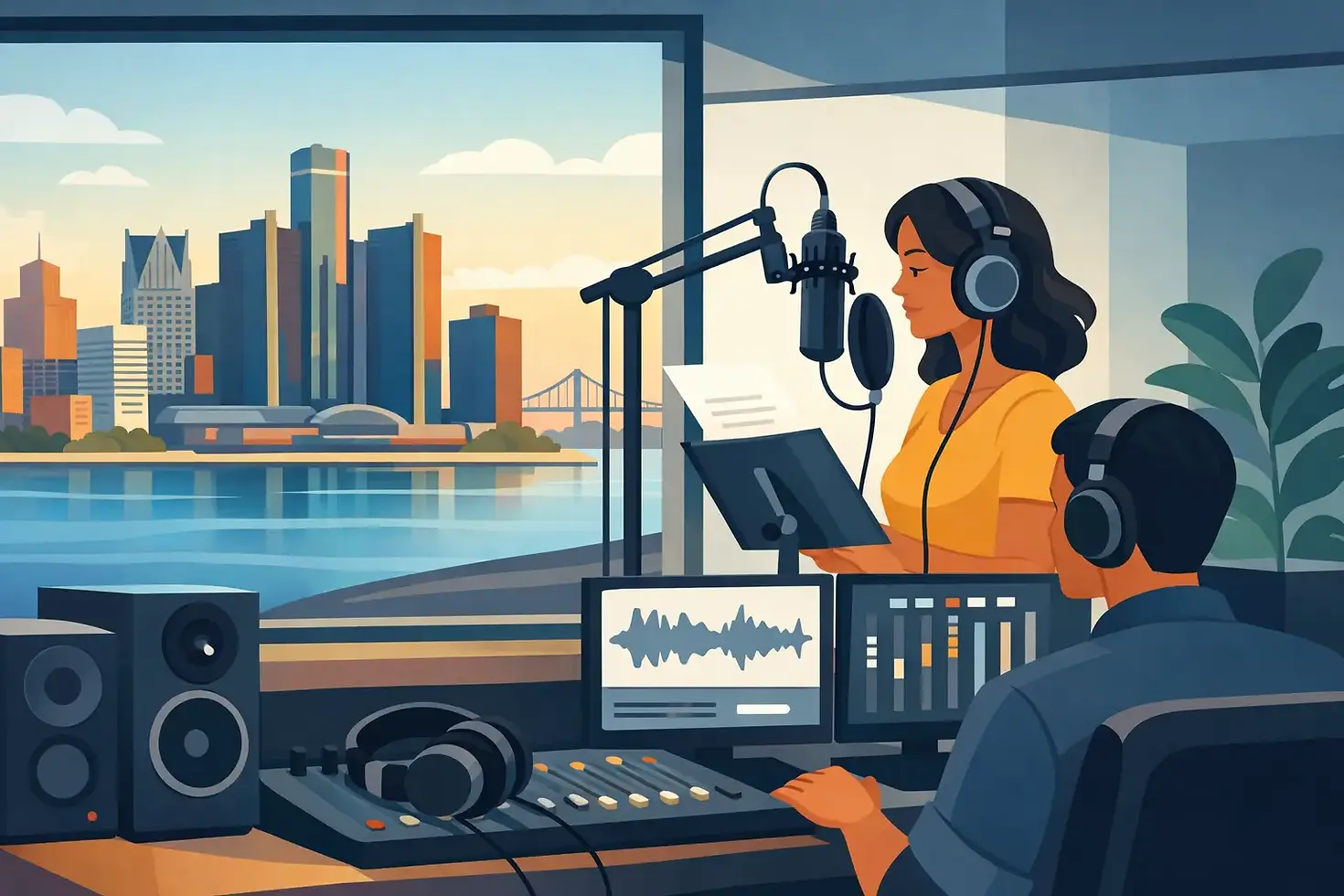
The first question is not simply, “Do they have a microphone?” Professional microphones are essential, but a strong session begins with the room around them. A dedicated sound booth or controlled recording environment reduces reflections, outside noise, and the hollow sound that can make a polished message feel homemade.
Detroit-area creators often need more than a place to read into a mic. They need a production partner who understands the difference between a warm, intimate audiobook performance and a direct, energetic commercial read. They may need help setting levels before recording begins, capturing alternate takes without losing momentum, and preparing files that an editor, agency, publisher, or client can actually use.
The right studio should make the technical side feel organized without making the creative process feel intimidating. For a first-time voice talent, that can mean clear coaching on mic distance, pacing, breath control, and script marks. For an experienced performer or producer, it can mean a dependable space, well-maintained equipment, efficient session flow, and files delivered to the required specifications.
Sound Control Is More Valuable Than Extra Gear
A high-end microphone in an untreated room will still record the room. That is why sound control deserves more attention than a long gear list. Listen for a dry, focused recording where the voice is present without sounding boxed in or overly processed.
A controlled booth also creates consistency. If you are recording a multi-chapter audiobook, an e-learning series, or recurring brand content, you want later sessions to match the tone and quality of the first. Consistency saves time in post-production and protects the listener’s experience.
There is a trade-off here. Some productions need an extremely dry, close sound that can be shaped later, while others benefit from a slightly more natural feel. A good engineer or producer will ask where the audio is going before deciding how much processing is appropriate.
Start With the Final Use of Your Voiceover
The most useful studio conversations begin with the deliverable. A voiceover for a 15-second social ad has different needs than a long-form narration project. The performance, editing approach, music choices, and file format should all support the way the finished piece will be used.
For commercials and branded media, timing is often the pressure point. You may need a read that fits exactly within 30 or 60 seconds while still sounding natural. That takes more than cutting words after the fact. It requires intentional pacing, alternate takes, and a producer who can identify where the copy is rushing or leaving too much space.
For podcasts, documentaries, and corporate narration, clarity and continuity matter most. The listener should hear the message, not the editing. Careful cleanup can reduce distracting breaths, clicks, and background noise, but heavy-handed processing can make a human voice sound artificial. The best result is clean enough to feel professional and natural enough to feel believable.
Audiobook production has its own demands. Long sessions require vocal stamina, consistent tone, and organized file management. Authors and narrators should look for a studio that can support retakes, chapter-by-chapter organization, editing, and the pacing needed to keep a listener engaged over hours, not seconds.
The Session Experience Affects the Performance
Voiceover is performance work, even when the copy is straightforward. If the room feels rushed, confusing, or uncomfortable, it often shows up in the recording. Creators need a place where they can settle in, try a different interpretation, and take the extra pass that turns a good read into the right one.
That does not mean every session needs to be slow. Professional production should be efficient. Scripts should be reviewed before the clock starts, pronunciations should be identified early, and decision-makers should be available when approvals are needed. But efficiency comes from preparation, not pressure.
A green room and comfortable production environment can be especially helpful for longer sessions, talent working with clients, or teams recording multiple assets in one day. Small details matter. Water nearby, a quiet place to review copy, and a clear communication path between the booth and control area help performers stay focused on the work.
If you are recording remotely with a client or creative director listening in, ask how the studio handles collaboration. Remote direction can keep projects moving when stakeholders cannot be in the room, but it needs reliable communication and a session lead who can keep feedback specific and productive.
Come Prepared, but Leave Room for Direction
Bring the latest approved script, pronunciation notes, reference audio if available, and a clear understanding of the desired tone. If the project has a legal disclaimer, an exact runtime, or client-required wording, flag it before recording begins.
Still, do not over-rehearse every line into a single fixed delivery. A fresh read can reveal a better rhythm, a stronger emphasis, or a phrase that needs to be adjusted for the ear rather than the page. The words may be approved, but spoken language has its own timing.
For new talent, professional direction is not a sign that you are unprepared. It is part of the process. A producer can hear when a sentence needs more energy, when a pause is too long, or when a word is technically correct but emotionally flat. That outside perspective is often what brings the performance into focus.
Post-Production Is Where Raw Audio Becomes Usable Media
Recording is only one stage of voiceover production. Editing determines how the performance feels from beginning to end. Depending on the project, post-production may include selecting the strongest takes, removing mistakes, tightening pauses, balancing volume, reducing noise, and applying light equalization or compression.
Some projects need more. A commercial may require music, sound design, multiple voice tracks, or a mix that sits properly under video. A podcast intro may need voiceover integrated with a branded sonic identity. A narrated video may require edits timed to visuals and captions. Working with one production team can reduce the friction of moving files between separate recording, editing, and video vendors.
At The Inner Circle Studio, creators can move from a professional recording environment into editing and broader content production support without having to rebuild the process with a new partner. That can be particularly valuable for entrepreneurs and local brands creating a campaign, course, podcast, or video series with multiple moving parts.
Before booking, ask what is included after the session. Is basic cleanup part of the service? How many rounds of revisions are practical? Will you receive a raw file, a finished file, or both? Can the studio prepare the correct format for broadcast, social media, a publisher, or a video editor? Clear answers prevent surprises and help you budget accurately.
Choose a Studio That Supports the Work You Are Building
The best voiceover studio is not always the biggest room or the most complicated setup. It is the space that fits your project, gives your voice professional care, and helps you leave with audio that is ready for its next step.
For a quick audition, a well-run booth and clean file may be all you need. For a larger brand project, it may make sense to work with a team that can help shape the script, direct the read, edit the audio, and prepare visual content around it. The right choice depends on your goals, timeline, budget, and how much support you want in the room.
Your voice carries your expertise, personality, and point of view. Give it a recording environment that lets people hear all three clearly, then let the finished work speak for itself.


Comments